Across Boise, almost 70% of homes with original hardwood floors require restoration within 15 years. This is a statistic that often surprises homeowners. Our dry, seasonal climate significantly accelerates wear, a fact many overlook.
Discover More About Custom Floors in Boise

Find Out More About Great Expectations Flooring
This guide is designed to enlighten you on Floor Restoration in Boise. It highlights how Boise floor restoration services enhance both value and comfort. Input from Staub Hardwood Restoration and The Floor Trader shows when professional restoration makes more sense than replacement.
This guide also covers local trends, such as the move toward wide planks and light finishes. It also reviews typical timelines and maintenance tips between contractor visits. My goal is to simplify boise wood floor restoration so you can make informed choices.
Why Floor Restoration Counts In Boise
Homeowners in Boise deal with unique challenges that affect hardwood floors. Dry air, wide seasonal swings, and cold winters make hardwood behave in ways many people do not expect. This results in issues like cupping, gaps, and finish wear. To reduce these problems, I recommend scheduling restoration around natural humidity cycles. This approach ensures that repairs are more durable and finishes adhere better.
Boise Climate And Humidity Challenges
Boise’s high desert climate leads to moisture loss in wood during winter and rapid expansion in spring. I closely watch indoor heating cycles and relative humidity. These factors significantly impact board movement. Following Staub’s advice on proactive maintenance is essential. It aligns with my observations: managing humidity helps prevent structural stress and extends hardwood lifespan.
How Seasonal Shifts And Dry Air Impact Hardwood
Cold months tend to create hairline gaps in flooring, while warmer periods often tighten those seams. Finishes deteriorate faster due to large daily humidity swings. I encourage homeowners to time hardwood floor restoration for periods of seasonal stability. This timing minimizes sanding dust issues and ensures even curing of sealers.
Long-Term Value: Why Restoration Often Beats Replacement
Engineered planks offer dimensional stability in Boise, while solid oak remains a popular choice for refinishing. The Floor Trader supports this general approach. Hardwood floor restoration is generally more cost-effective than replacement and preserves a home’s original charm. Local Boise floor restoration services can tailor finishes to Boise’s climate, helping protect resale value without the environmental cost of tearing out quality flooring.
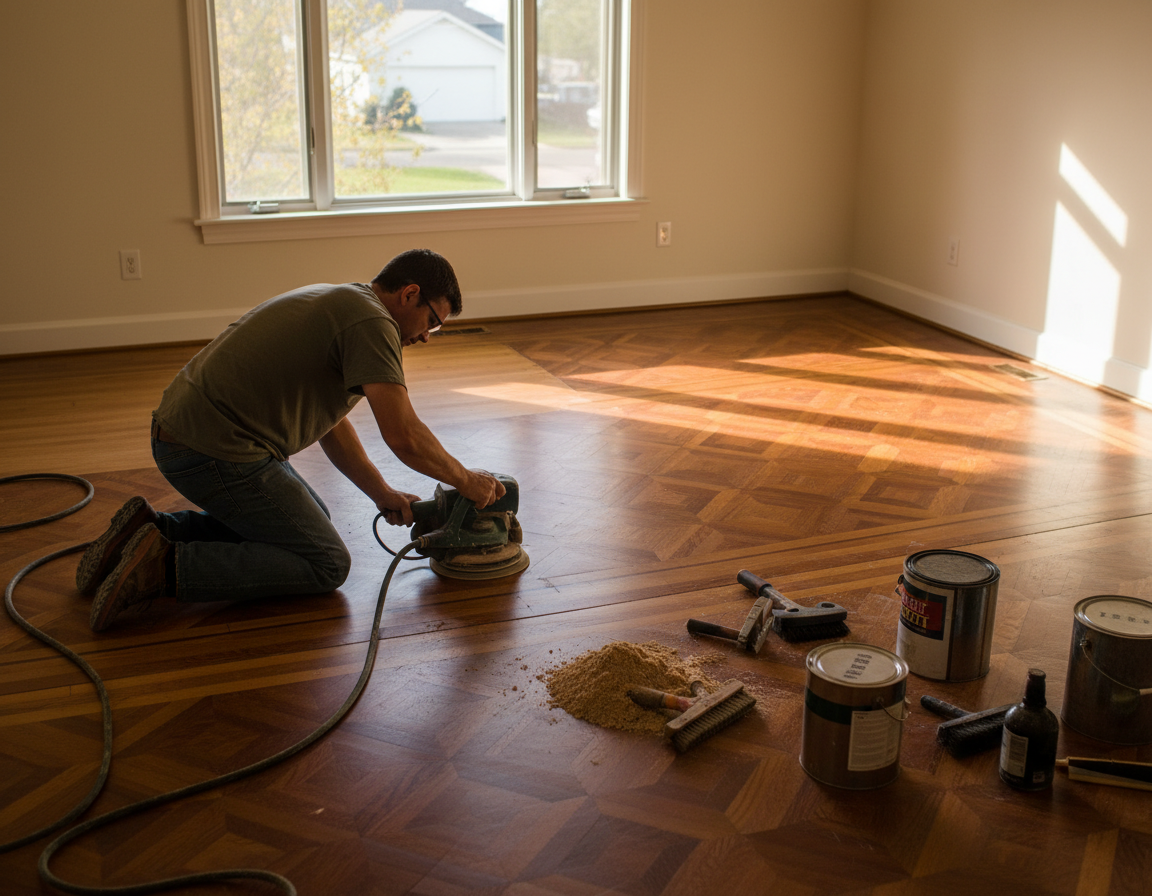
Floor Restoration In Boise
I help homeowners understand the different ways hardwood floors can be restored. This ensures they select a solution that aligns with their home’s aesthetic and budget. I focus on real-world results, whether that means restoring the finish, repairing damaged areas, or replacing boards when repair will not be enough. Working alongside local showrooms and contractors, I help clients visualize finish options and select materials that fit Boise homes.
Typical local services include refinishing, polishing, repairs, and replacement
Most Boise professionals and showrooms tend to offer three primary service categories. Refinishing involves sanding, staining, and sealing to rejuvenate worn-out surfaces. Polishing, on the other hand, enhances shine between full refinishing cycles and serves as a protective measure. For more serious concerns, repair work and selective board replacement are used to handle scratches, dents, and water damage.
Typical project timelines and what to expect in Boise homes
Most initial inspections and written estimates are completed within one to three days. Scheduling depends on contractor availability, and spring and fall are usually the busiest seasons. A full refinishing job for an average living room, including sanding, staining, and topcoat application, often takes about two to five days.
When repairs or subfloor work are required, I allow additional time in the project plan. I guide homeowners on temporary living arrangements during restoration and suggest relocating furniture and pets to protect both. Boise’s seasonal humidity can impact the drying and curing times of coatings, affecting the overall project duration.
Local trends influencing restoration choices (wide planks, light finishes)
In Southwestern Idaho, there is a preference for light, natural finishes and wider planks in design. I recommend species like oak or hickory for their durability and aesthetic appeal. More clients are also asking about eco-friendly sealers because they want lower-VOC products without giving up longevity.
| Service | Typical Timeframe | When It Makes Sense |
|---|---|---|
| Floor refinishing | Typically 2–5 days | Worn finish, visible scratches, color change |
| Boise floor polishing | Same-day touch-up | Restore shine between refinishing jobs, light surface wear |
| Repair and spot replacement | 1–3 days | Isolated damage, water stains, loose boards |
| Complete replacement | From several days to multiple weeks | Best for extensive damage or a major layout or species change |
Signs Your Floors Need Refinishing Or Repair
Checking your floors is much like checking a car before a trip: a quick review, a few targeted tests, and a practical plan. Scratches that catch the light, a dull finish in busy walkways, or squeaky boards are all signals that action is needed. Spotting problems early can save money and helps determine whether a small repair or a full restoration is the better option.
Surface wear
Scratches, worn finish, and dullness are clear signs of top coat loss. A fingernail test can reveal if sanding and refinishing are necessary. Routine polishing may correct mild dullness, but ongoing thinning usually points to the need for hardwood floor refinishing in boise to restore color and protection.
Structural concerns
Cupping, gaps, and loose boards indicate movement between wood and substrate. After seasonal changes, I often check exterior-wall areas for cupped boards. When wide gaps appear in winter and close back up in summer, moisture stress is often the cause. Problems like these usually need more than just a fresh coat. A full evaluation is best because floor repair in boise may require board replacement, fastener resetting, and subfloor inspection.
Deep stains and water damage
Dark stains, buckling, or soft spots suggest water damage. It is important to test suspicious areas with a light scrape and a probe. If the core is compromised, surface sanding alone will not suffice. Severe discoloration or recurring stains necessitate specialized hardwood floor restoration, which may include plank replacement and subfloor treatment to prevent mold and future failures.
During inspections, I use a simple matrix to guide the next steps. Below, I compare common symptoms with likely treatments and realistic timelines.
| Symptom | Likely Cause | Typical Solution | Typical Time |
|---|---|---|---|
| Minor scratches, dull finish | Top coat worn by foot traffic | Screen and recoat; light buffing | 1 day |
| Deep scratches, finish gone | Finish worn through to bare wood in high-traffic zones | Full sanding, staining, and sealing through hardwood floor refinishing in boise | 2–4 days |
| Cupping and wide seasonal gaps | Moisture fluctuation affecting boards | Acclimation, refastening, selective board replacement, and floor repair in boise | 2–5 days |
| Severe staining, soft spots, or buckling | Water damage with possible subfloor problems | Remove damaged boards, repair subfloor, hardwood floor restoration | Usually 3–7+ days |
| Squeaks and loose boards | Shrinking boards or loose fasteners | Refasten, spot glue as needed, localized repair | 1–2 days |
Warning signs such as recurring water stains or structural movement call for professional evaluation. This ensures the chosen approach delivers lasting hardwood floor restoration, not just a temporary fix.
Hardwood Floor Refinishing: Process And Best Practices
I guide homeowners step by step through the refinishing process with a practical checklist. That helps them understand exactly what the process involves. The process includes careful inspection, the correct sanding order, proper stain selection, and the right finish application. These steps help deliver lasting results while reducing unexpected problems.
The journey starts with a meticulous inspection and preparation phase. I check finish depth, examine the board condition, and look for cupping or loose boards. I also consider Boise’s humidity patterns to prevent gapping or swelling during the curing process.
Inspection and preparation: checking finish depth and wood condition
Before moving forward, I check finish thickness in multiple spots to see if full sanding is needed. I document any surface stains and inspect the subfloor when necessary. I also remove baseboards when required and plan for dust control and ventilation to ensure a safe and clean environment.
Sanding, staining, and sealing: steps and product choices
My sanding technique involves a correct sequence of grits to avoid any visible marks. I start with a coarse grit, then move to medium and fine grits. I suggest testing stain samples in the showroom under both natural and artificial light to confirm the final tone. The best finish depends on durability goals and color retention, and options may include oil-based, water-based, or oil-modified polyurethane. I apply several thin coats while following recommended cure times and maintaining proper ventilation for each product.
Typical refinishing frequency for Boise floors and maintenance tips
From what I have seen, hardwood floors typically require refinishing every seven to ten years based on traffic levels and overall care. I advise on seasonal maintenance, such as using humidifiers in winter and placing mats at entry points. Routine cleaning with manufacturer-approved products can help extend finish life and reduce the need for professional restoration.
I emphasize how important it is to test finishes in person and hire a contractor who follows proven best practices. The goal is consistent sanding, correct stain matching, and a long-lasting seal. This helps ensure that floor refinishing delivers the best possible results in Boise homes.
Choosing Materials And Finishes For Boise Homes
I guide homeowners through material choices that suit Boise’s climate and style. Durability, appearance, and long-term performance are my main focus when planning boise wood floor restoration. My approach combines local design trends with practical guidance so each choice works for daily life and resale value.
Solid Vs. Engineered Hardwood For Boise’s Climate
I explain the differences clearly when clients ask about solid vs engineered hardwood. Solid planks work well in stable indoor zones like formal dining rooms. Engineered options resist seasonal humidity swings in basements and kitchens.
Engineered wood is usually my recommendation for rooms over concrete or places where moisture changes happen often. For upstairs living areas with more stable humidity, I usually recommend solid hardwood.
Popular Species And Finishes In Southwestern Idaho: Oak, Hickory, Matte, And Light Tones
Locally, oak and hickory continue to lead because they offer a strong balance of durability and grain character. Many Boise homeowners choose 2 1/4-inch oak when planning boise floor restoration services that preserve original character.
Light, gray, and whitewashed tones remain in demand. Matte finishes hide scratches and give a modern look. Wide planks add a spacious feel in open-plan homes I work on.
Eco-Friendly Yet Durable Finish Options
I often recommend low-VOC waterborne polyurethanes and hardwax oils because they create a safer indoor environment. These finishes handle Boise’s dry air while reducing chemical odors during boise wood floor restoration.
| Comparison Factor | Solid Hardwood | Engineered Wood |
|---|---|---|
| Best room locations | Upstairs living areas, formal rooms | Kitchens, basements, over concrete |
| Humidity performance | Lower tolerance and best in stable indoor conditions | High tolerance; resists seasonal movement |
| Refinishing | Multiple sandings over its life | Depends on wear layer thickness; some allow one or two refinishes |
| Common species | Oak, maple, hickory | Commonly oak, hickory, or engineered exotic species |
| Finish options | Oil, waterborne, polyurethane | Often paired with waterborne, UV-cured, or hardwax oil finishes |
I guide clients in matching species and finish choices to traffic levels and interior color palettes. I also evaluate subfloor conditions and recommend the best option for long-term performance in Boise conditions. The goal of my recommendations is to reduce future repairs and make boise floor restoration services successful without replacing more than necessary.
Professional Floor Restoration Services In Boise
When I work with a contractor on a home project, I look for clarity from the start. When it comes to hardwood restoration in Boise, I favor teams that pair local experience with a structured approach. Skilled floor restoration contractors are adept at navigating regional moisture patterns, timing the curing process, and selecting local materials.
What a professional contractor should offer
An itemized estimate should clearly outline labor, materials, and any stain or finish allowances. A credible proposal should spell out a specific timeline, including start and end dates, working hours, and milestone points. It must also include warranties that are clear and detailed, covering finish, installation defects, and the process for making claims.
Questions I always make sure to ask
- Which finish brands and sheen levels do you recommend for Boise homes?
- Which dust-control methods will be used during sanding?
- What is the full cure time before normal foot traffic resumes?
- Will any part of the work be subcontracted, and if so, who are the listed subcontractors?
- Can you share local references and showroom samples for review?
How I compare bids and choose a contractor team
I first compare the scope of work. Two bids with similar pricing can still vary widely in what is included. Next, I consider the materials: the brands, finish coats, and stain quality are critical for durability. The timeline is also important, as weather and scheduling can impact the curing process.
I place extra value on contractors who offer showroom sample consultations. It gives me the chance to view final tones under real lighting. A contractor who communicates clearly, carries insurance, and offers a written warranty earns my trust. Those qualities separate true floor-restoration professionals from simple installers.
Costs, Estimates, And Value Of Restoration Vs Replacement
I break down costs in detail so homeowners can compare floor restoration in boise with full replacement. Using local data from Staub, The Floor Trader, and showroom insights, I explain the most common cost drivers. I also guide on how to budget for unexpected expenses.
Common cost factors for refinishing and repairs in Boise
The room’s size is one of the main factors that influences cost. Larger areas spread out the expenses of labor and materials, often reducing the cost per square foot.
Board condition is another major factor. Severe wear, cupping, or water stains usually increase both labor and material costs. Replacing boards or repairing the subfloor costs more than routine sanding and recoating.
The type of finish chosen also influences the final price. Additional coats, premium finishes, and custom stains can increase the estimate. Dust control and cleanup are always included in my quotes to reflect a complete project scope.
When refinishing makes more financial sense
Refinishing is usually the more cost-effective choice when plank depth and structural integrity still allow a full sanding and new finish. According to Staub, this is often the more economical choice for Boise homes.
The Floor Trader recommends refinishing every 7–10 years to help reduce long-term costs. A professionally completed job with a warranty is often more cost-effective than piecemeal repairs or premature replacement.
Budgeting for additional repairs like board replacement or subfloor work
I usually recommend reserving 10–20% of the estimate for unforeseen repairs. Hidden damage, nail pops, or rotten boards can add to the time and materials needed.
Showroom consultations provide accurate price ranges for materials and finishes. It helps reduce surprises when selecting between oak, hickory, or engineered planks.
| Cost Element | Typical Effect | Local Boise Considerations |
|---|---|---|
| Project square footage | Directly affects baseline labor and material totals | Large open-plan Boise homes may reduce per-square-foot pricing |
| Board condition | Poor board condition increases labor and parts costs | Boise’s dry seasonal cycles can expose gaps or cupping that require repair |
| Finish type & coats | Premium finishes and extra coats raise costs | Waterborne finishes remain popular in Boise because they cure quickly and have low odor |
| Board replacement | Adds material cost and more labor time | Boise showrooms help match species and plank width, reducing mismatch risk |
| Subfloor condition | May be expensive and can affect long-term job performance | Some older Boise homes may require joist or subfloor reinforcement |
| Dust control and cleanup | Adds cost but helps improve the final outcome | Professional containment systems reduce health risk and limit rework |
I weigh the costs against the value of refinishing versus replacement. For many homeowners in Boise, targeted floor repair in boise and timely hardwood floor restoration make financial sense. They help preserve original character while supporting resale value.
When I prepare an estimate, I break down each cost driver and explain the likely range for board replacement or subfloor repair. A clear estimate and a 10–20% contingency help reduce unexpected surprises. This approach ensures smarter long-term choices for floor restoration in boise.
DIY Care And Maintenance Between Professional Jobs
I rely on a straightforward maintenance routine to protect hardwood floors in Boise’s climate. Daily routines significantly reduce wear and extend the interval between professional services. They reduce surface damage and help floors stay in better condition before the next refinishing cycle.
Care Tips For Boise’s Dry Air: Daily And Seasonal
For daily care, I use a vacuum with a soft-brush attachment to remove grit that can scratch finishes. Microfiber mops used with pH-neutral cleaners provide gentle, effective cleaning without leaving residue.
In winter, I use a humidifier to reduce gaps and shrinkage caused by dry air. In the summer, I ensure windows are closed and place rugs in sunlit areas to prevent UV-induced fading. Felt pads under furniture and rugs in busy areas help reduce concentrated wear.
Safe Products And Methods For Polishing And Spot Repairs
Before using any cleaner or polish, I test it on a hidden section or scrap board. I prefer products from reputable brands like Bona or Basic Coatings, as they are often recommended by manufacturers.
- Quickly blot spills with a soft cloth to avoid water stains
- For light scratches, I employ touch-up markers or stain sticks that match the wood’s tone
- For deeper gouges, I use wax fillers and then buff lightly during routine polishing to blend the repair
When To Stop DIY And Contact Great Expectations Flooring
I cease DIY efforts when I encounter widespread finish failure, persistent cupping, loose boards, or signs of water damage. These warning signs suggest that polishing or small repairs are no longer enough.
When structural issues appear or refinishing goes beyond light touch-ups, I turn to Great Expectations Flooring for a professional assessment. Their experience helps define the correct timing and scope of refinishing so expensive errors can be avoided.
Selecting Great Expectations Flooring For Your Project
I bring local knowledge and showroom resources to every job. My work combines practical advice from Staub’s localized expertise model with showroom practices inspired by The Floor Trader. It helps guide clients on project timing, finish selection, and the most cost-effective choice between refinishing and replacement.
My boise floor restoration services include on-site inspections and detailed written estimates. My showroom keeps hands-on samples of oak, hickory, and engineered options. Clients can test color and texture before committing. Durable products and clearly explained warranty options are part of how I help protect your investment.
My Local Expertise And Showroom Resources
I start with a walk-through to assess wood condition, finish depth, and any structural issues. If refinishing is the best solution, I use dust-control sanding equipment and lab-tested finish systems. My showroom is arranged for sample testing and side-by-side comparisons that simplify decision-making.
Services I Provide: Refinishing, Repairs, Polishing, And Custom Finishes
My services include sanding, staining, sealing, polishing, board repairs, and subfloor assessments. Historic homes often require custom finish matching, and I handle that work as well. As one of the floor restoration contractors in Boise, I focus on results that last under local climate conditions.
My Client Process: Consultation, Samples, Scheduling, And Warranties
The initial consultation starts with a detailed estimate and a timeline based on seasonal best practices. Sample previews are available in the showroom or in your home so you can see how finishes look in your lighting. I schedule work around temperature and humidity so curing happens correctly and long-term finish performance is protected.
I keep communication transparent throughout the project and finish with a final walkthrough to confirm satisfaction. All warranty coverage is documented in writing so you know exactly what is included with professional floor restoration from Great Expectations Flooring.
Final Thoughts
In Boise’s dry climate, timely care is essential for maintaining wood floors. Following Staub’s advice, I advocate for regular inspections and refinishing when finish wear is evident. That strategy helps preserve floor value and can prevent the cost of full replacement.
Floor Trader expertise and local showroom guidance are both highly valuable. When discussing floor restoration in Boise or wood floor restoration, I emphasize the importance of selecting species and finishes that align with local trends. Common choices include oak, hickory, wider planks, and matte tones. Professional refinishing is often more cost-effective than replacing the full floor.
Hardwood floor restoration is a practical solution for maintaining your home’s character in Boise’s seasonal climate. For a detailed estimate, an in-person sample review, and a customized restoration plan, reach out to Great Expectations Flooring. They offer consultations on hardwood floor restoration and Boise wood floor restoration options. You can expect a transparent estimate and a realistic schedule, both designed to help protect your investment.
Frequently Asked Questions
What Boise Climate Challenges Should I Understand Before Restoring Hardwood?
How Do Seasonal Changes And Low Humidity Affect My Floors?
Why Is Restoration Often A Better Choice Than Replacement In Boise Homes?
What Floor Restoration Services Do Boise Contractors Usually Offer?
How Long Does A Standard Refinishing Project Usually Take In Boise?
What Boise-Area Trends Should Influence My Restoration Choices?
What Early Signs Show That My Hardwood Needs Refinishing Or Repair?
How Can I Tell Surface Wear From Structural Problems?
When Does Water Damage Require Board Replacement Or Subfloor Work?
What Does A Full Refinishing Process Include, And What Products Are Common?
How Often Should Boise Floors Typically Be Refinished?
Should I Pick Solid Or Engineered Hardwood In Boise?
What Species And Finish Styles Are Best For Durability And Resale In Boise?
Are Eco-Friendly Finishes And Reclaimed Woods Viable Options Here?
What Should I Expect From A Professional Contractor’s Estimate And Timeline?
What Questions Should I Ask When Interviewing Boise Floor Restoration Contractors?
How Do I Evaluate Competing Bids For The Same Project?
What Usually Drives Refinishing Costs In Boise?
When Is Refinishing Usually The Better Financial Choice Than Replacement?
What DIY Maintenance Helps Boise Hardwood Look Its Best Between Professional Visits?
Which Spot Repairs And Polishing Jobs Can I Safely Handle Myself?
When Should I Call Great Expectations Flooring Instead Of Trying Repairs Myself?
What Services Does Great Expectations Flooring Offer Boise Homeowners?
How Do You Time Projects To Match Boise’s Seasonal Conditions?
Do You Provide Warranties And Post-Project Maintenance Guidance?
How Can I Get Started With An Inspection Or Estimate From Great Expectations Flooring?
Related: Marketing 1on1 has the Best SEO Consultant in Boise